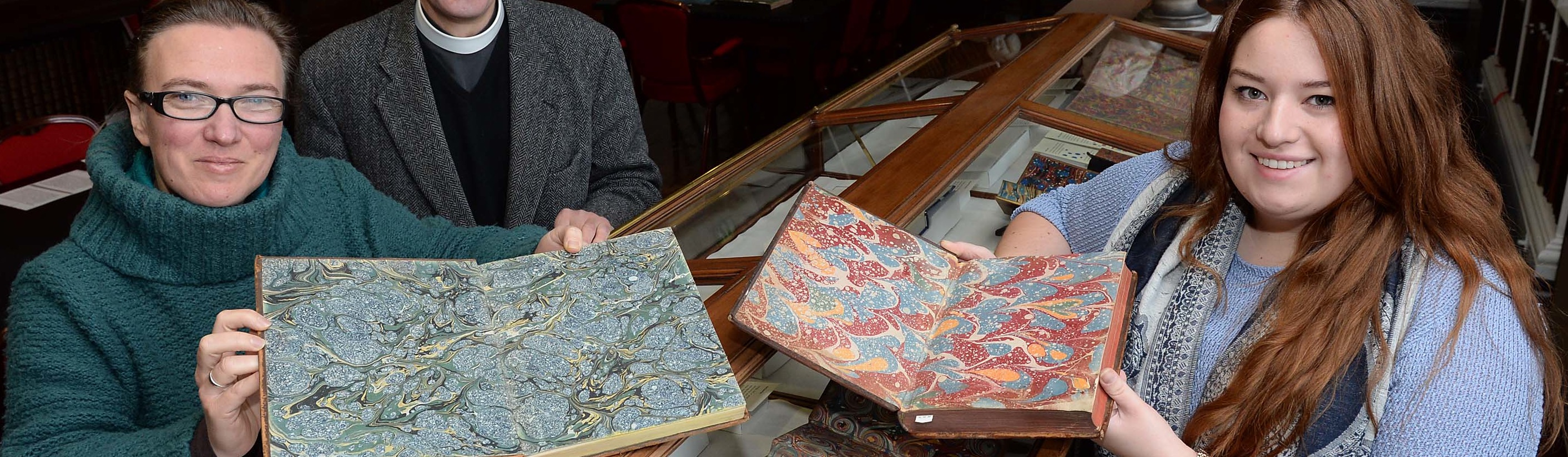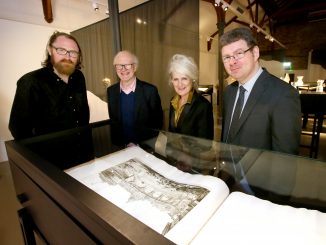
Standing from left, Assistant Keeper, Carol Conlin; Library volunteers Ursula Monaghan and Stephen Day; Administrative Officer Lorraine Grattan and Library volunteer the Very Revd Gregory Dunstan.
Image credit: Ian Maginess
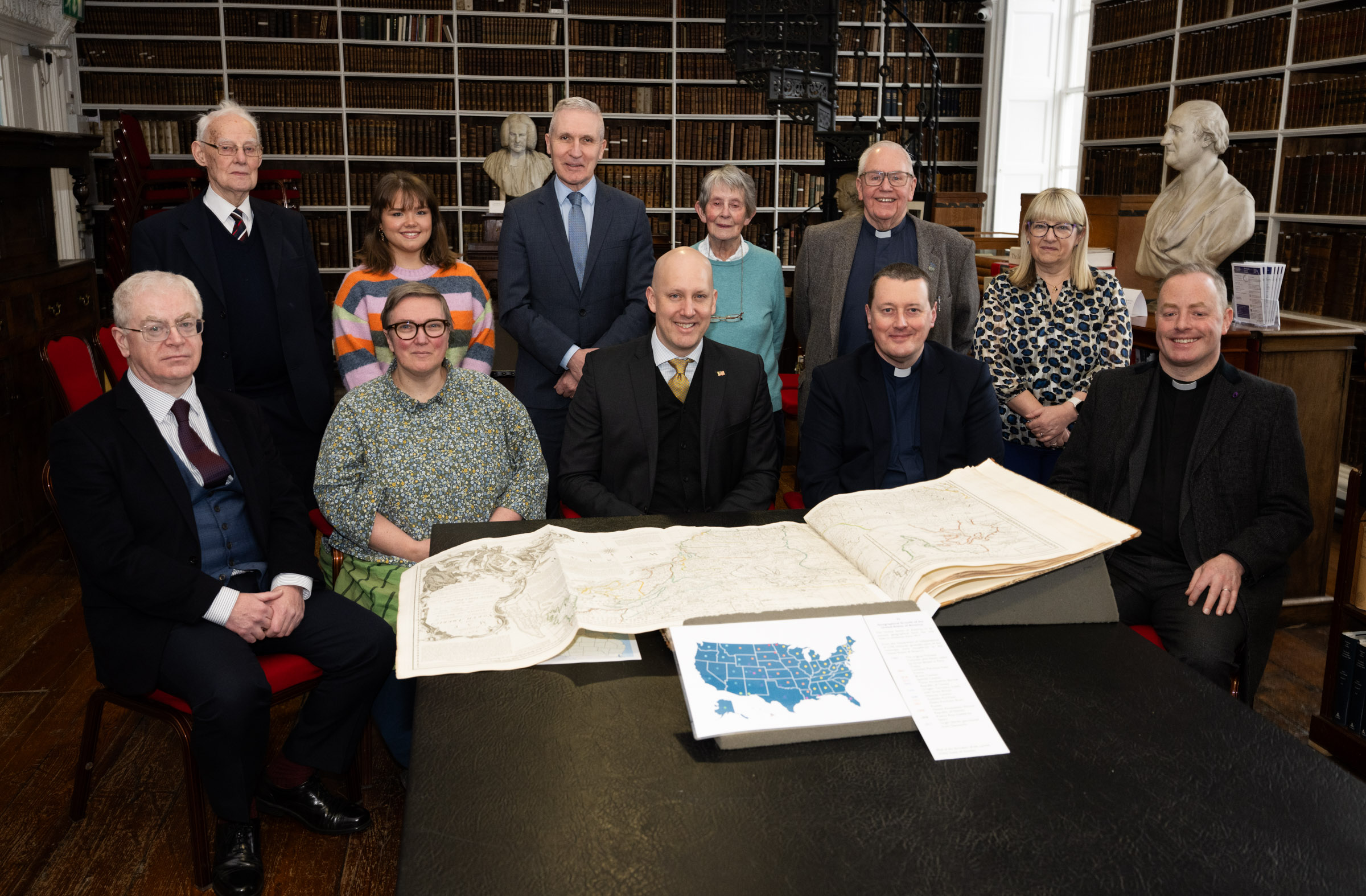
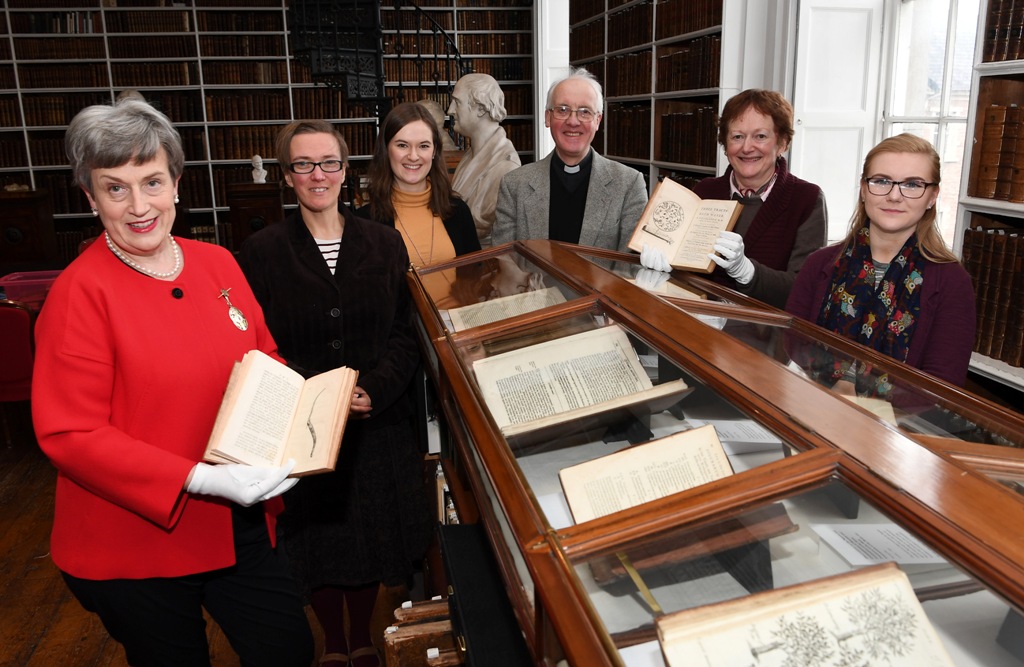
Standing from left, Library volunteers Eric Marshall and Chloe McCollum; Lay Governor and Guardian John-George Willis; Library volunteer Zena Dawson; Governor and Guardian Canon Bill Adair and Building Supervisor Sonia Ritchie.
Image credit: Ian Maginess
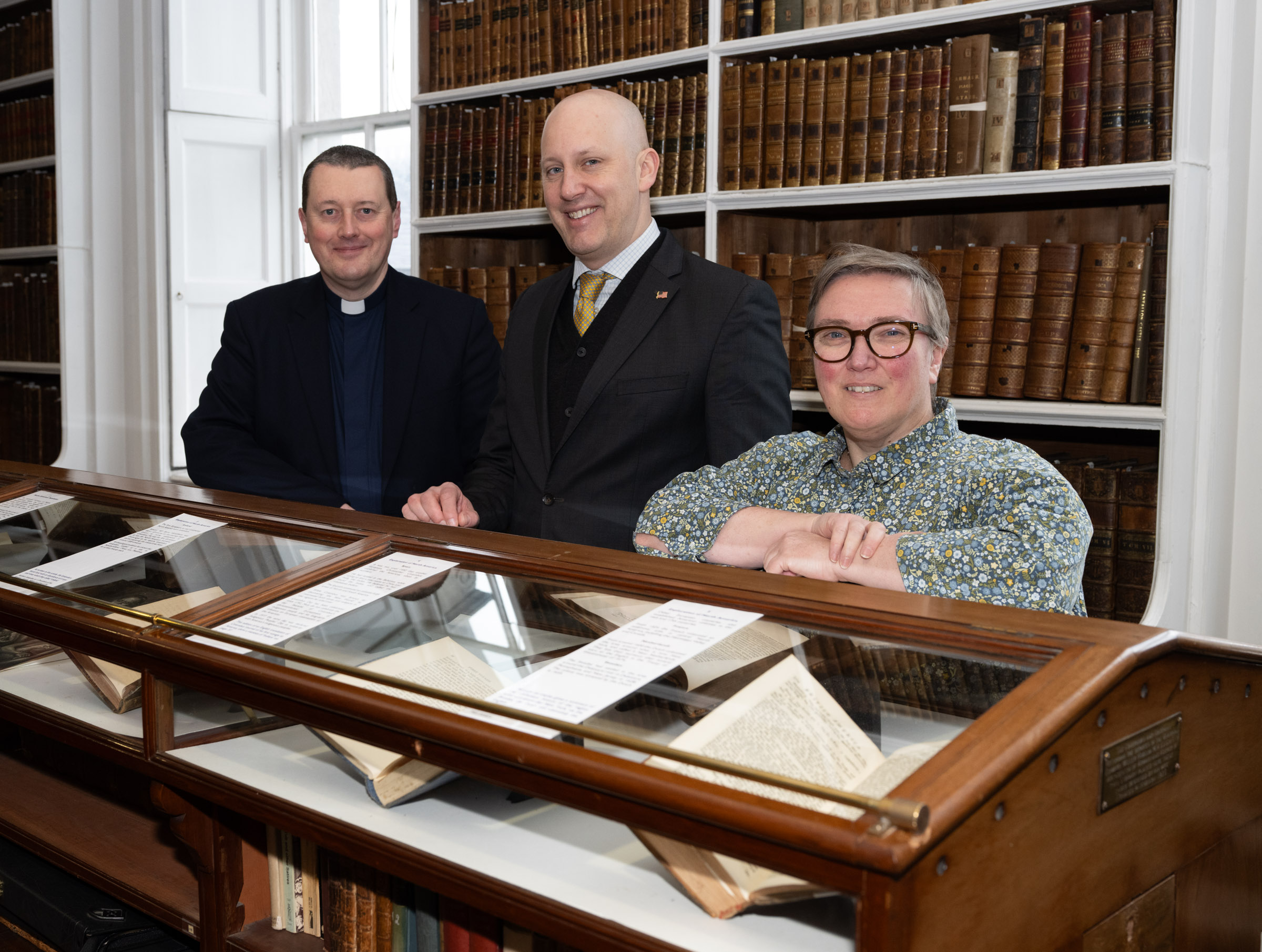
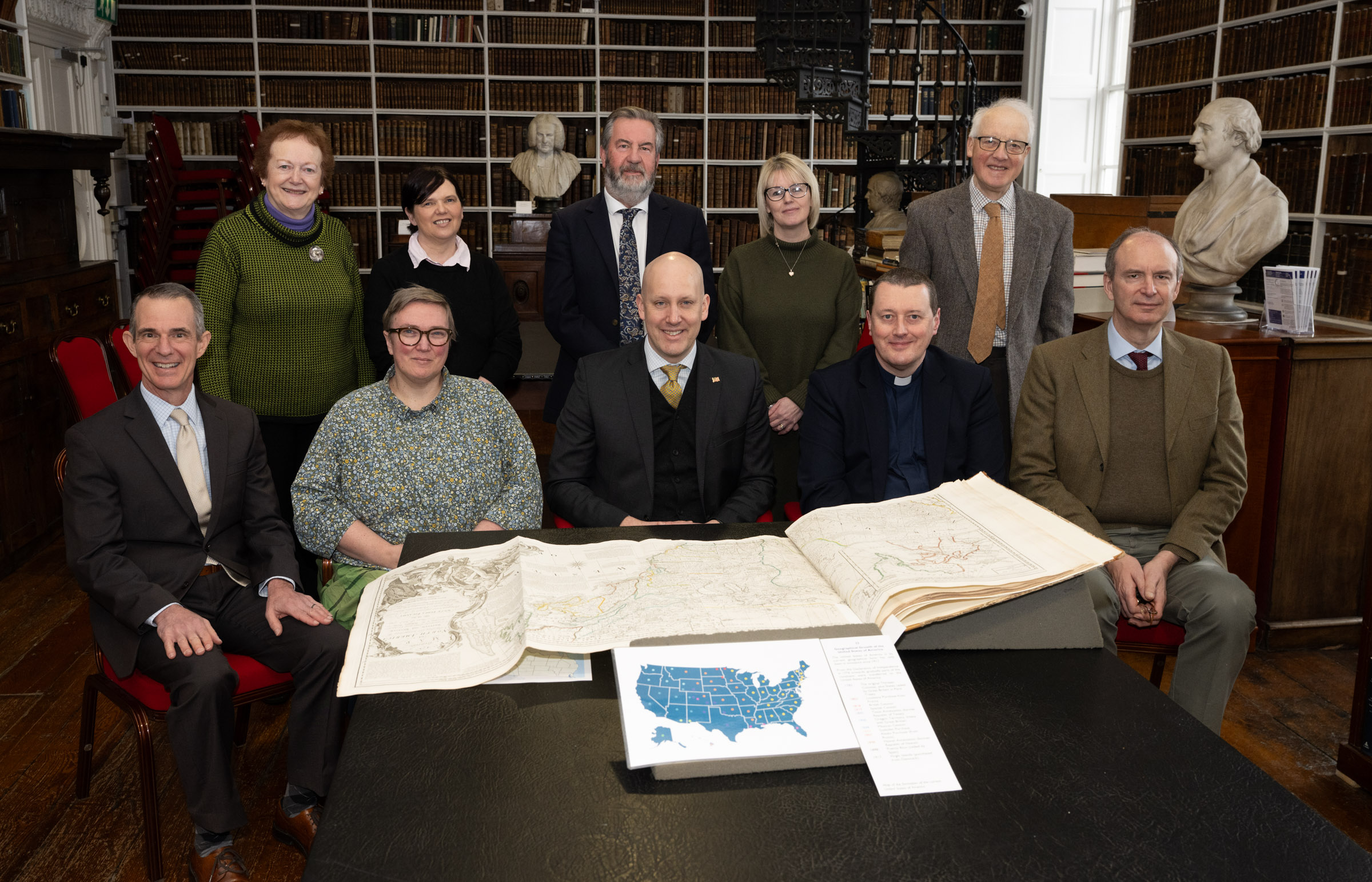
The Library welcomed US Consul General James Applegate to launch the Library’s current temporary exhibition, United States of America : The Road to Independence. The exhibition marks the 250th anniversary of the signing of the American Declaration of Independence. It will be on display to the public up to and including Independence Day, 4th July.
Representatives from the Library’s Governors and Guardians and the Library’s volunteers were present at the launch in support.
The exhibition is compiled entirely from the Library’s own collection, and follows a timeline from 40,000 years ago up to 1917, when the last territory was added to the United States of America. The exhibition shows the history of human habitation of that part of the world, the impact of early migration and exploration, African slavery in the colonies, and the creation of the Declaration of Independence.
When the Library was set up in 1771 by Archbishop Richard Robinson, he also paid for approximately 8,000 books to start the collection. These can be identified by the Robinson bookplate which is carried in the first books to be catalogued in this library.
They include some of the books on display in the exhibition, for example, Northern Antiquities or a Description of the Manners, Customs, Religion and Laws of the Ancient Danes, and other Northern Nations by the Genevan writer and historian, Paul Henri Mallen in 1770 in which he records that the first Europeans to see continental North America were Icelanders. Another work, A new geographical and historical grammar: Wherein the geographical part is truly modern, by the English historical and geographical writer, Thomas Salmon in 1745, gives a summary of the settlement history of the region around present-day New York, via the Swedes, the Dutch and the English. Also on display is a copy of the pamphlet Protest Against the Bill to Repeal the American Stamp Act, of Last Session which was prepared by Lord Lyttelton and signed by 33 minority members of the House of Lords in 1766.
Speaking ahead of the exhibition launch, the US Consul General said,
Armagh Robinson Library opened five years before the Declaration of Independence was adopted by our Thirteen Colonies and the birth of the American republic occurred during the Georgian transformation of Ireland’s Ecclesiastical Capital.
The Library stands as a lasting monument to our Enlightenment ideals. Through its preservation of transatlantic texts and early printed works, it safeguards sources that illuminate the foundations of American history and independence.
As we mark our semi-quincentennial across Northern Ireland through a series of ‘Freedom 250’ engagements, I want to thank the Governors and Guardians, staff and volunteers at Armagh Robinson Library for their commitment to preserve and promote our shared history. I wish them every success with this exhibition.
The Keeper of the Library, the Very Revd Shane Forster, added,
As the United States marks the semi-quincentennial of its Declaration of Independence, we are delighted to put on display some items from the Library collection that catalogue significant events that shaped 18th century America. The exhibition will be on display to the public up to and including Independence Day, 4th July.
Our first American tour group will arrive with us in mid-April and we will welcome more visitors from across the Atlantic throughout the summer.
A sincere thank you to our Archivist, Thirza Mulder, for the extensive research and thought put into this very timely exhibition.”