United States of America The Road to Independence
On 4 July 2026, the 250th anniversary of the signing of the Declaration of Independence of the United States of America will be commemorated.
In this exhibition we look at the history of North America in the run up to the official formation of the United States of America. We follow the timeline from 40,000 years ago until 1917, when the last territory was added to the United States.
Material from our collections shows the history of human habitation of that part of North America that would later become the United States of America.
Please click on an image to view a larger version.
1 North America : Early Migration
Between 14,000 and 40,000 years ago the first people arrived in North America via the ancient Bering Land Bridge between Asia and North America.
They organised themselves in bands, typically small groups of a few families, and nations, larger groups of multiple bands with their own social, cultural, economic and political government systems.
These Native American Nations were the earliest inhabitants of North America.
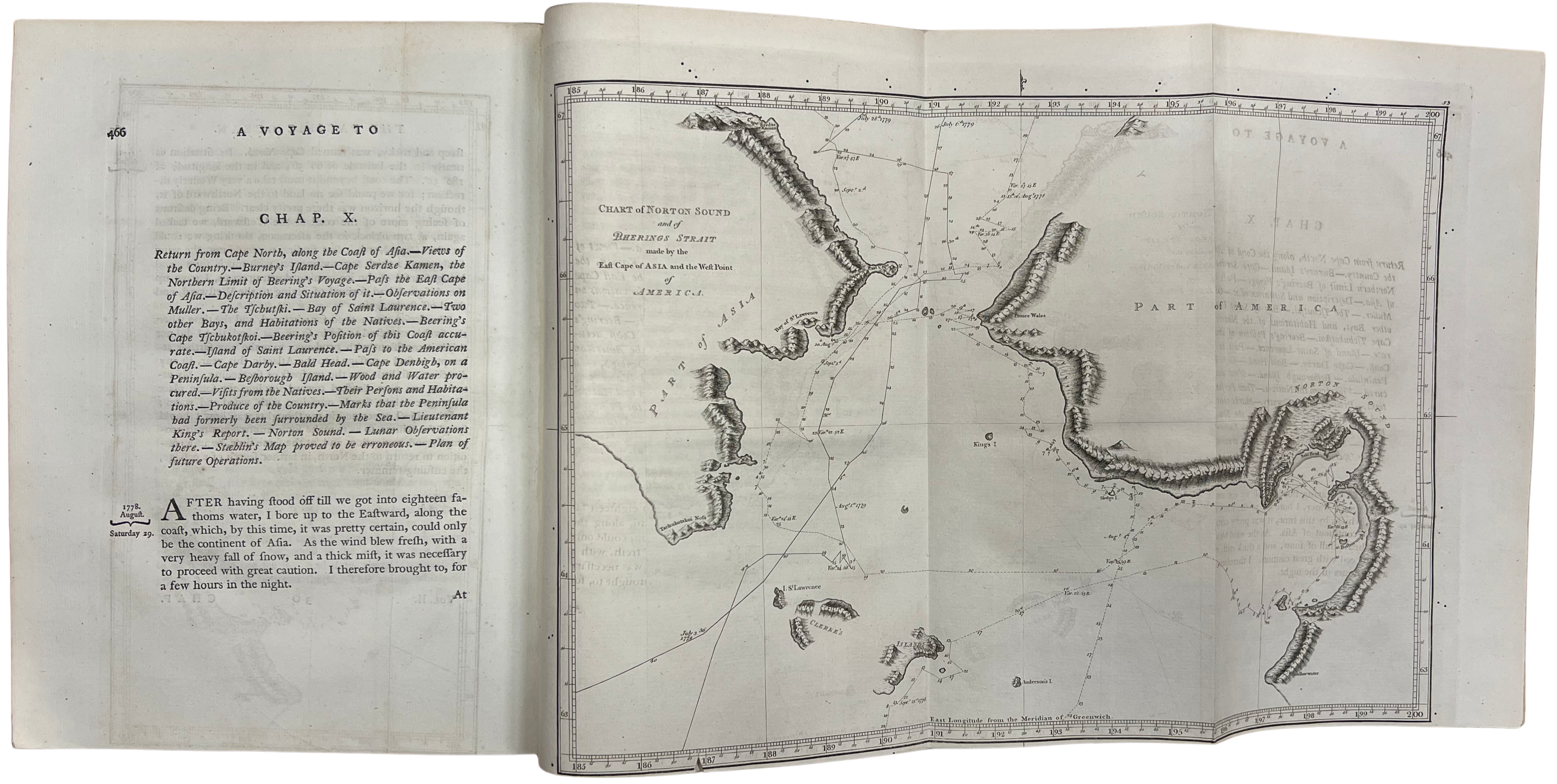
This map shows the Bering Strait as explored by James Cook in the 1770s. The islands on the map are all that remain of the Bering Land Bridge. The entirety of the ocean part of the map would have been covered by the Bering Land Bridge in pre-historic times.
2 Native American Population
The estimated numbers of Native Americans before the arrival of European colonists vary between 1.5 million and 20 million, divided into more than 1,000 nations. The huge variation is due to the absence of written records.
The period between the first arrival of native Americans and the first contact with European colonists is called Pre-Colonial (also known as Pre-Columbian, Prehistoric, and Pre-contact).
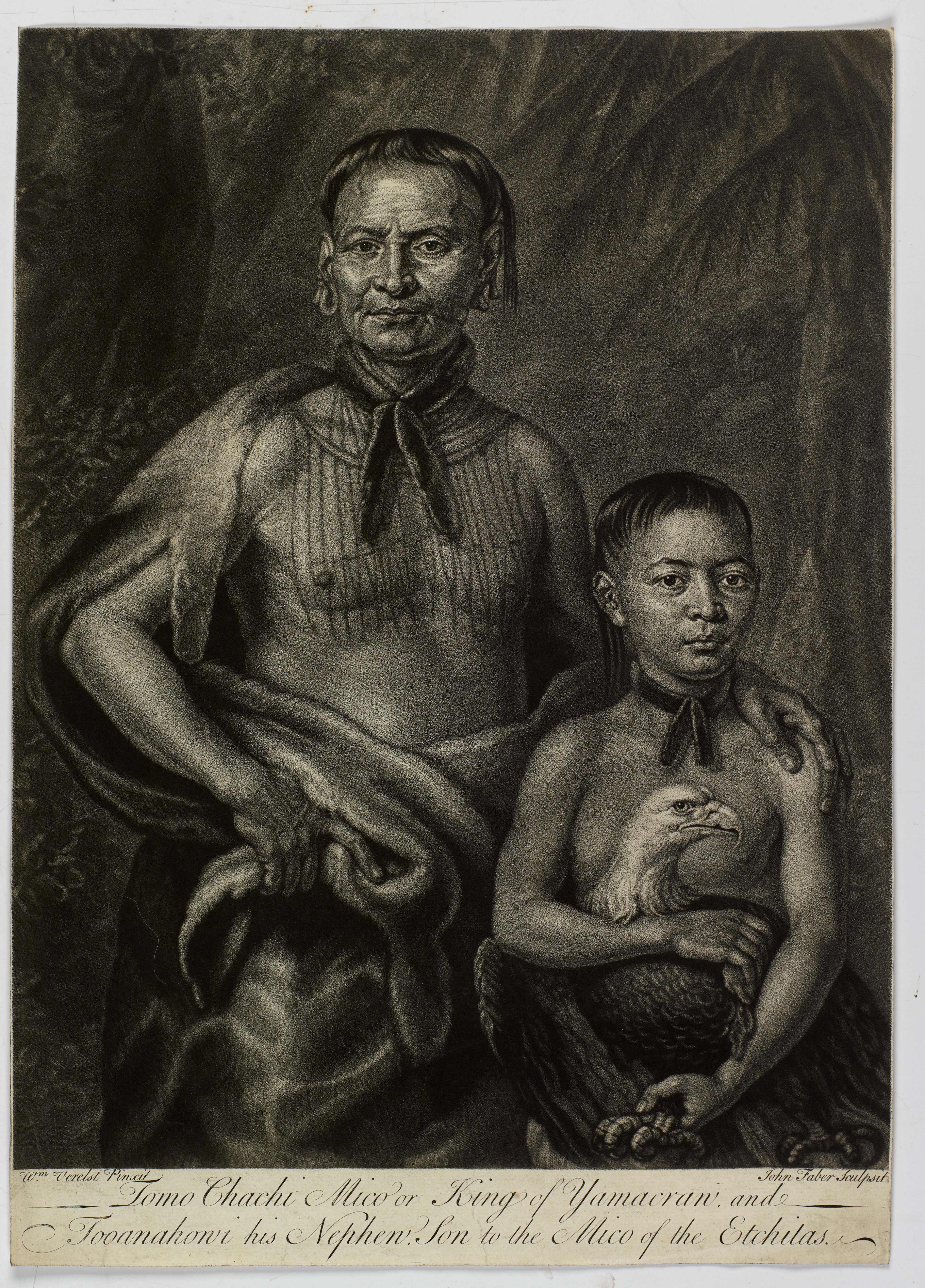
This print shows Tomochichi (1644-1739), chief of the Georgia Yamacraw. New colonists needed Tomochichi’s permission to settle in the area.
In 1733 Tomochici forged a diplomatic friendship with General Oglethorpe, who had arrived in the area with a group of colonists. A year later they travelled to London together to meet with George II, to campaign for fair trade agreements and education for the Nation.
3 Exploration of North America
Iceland
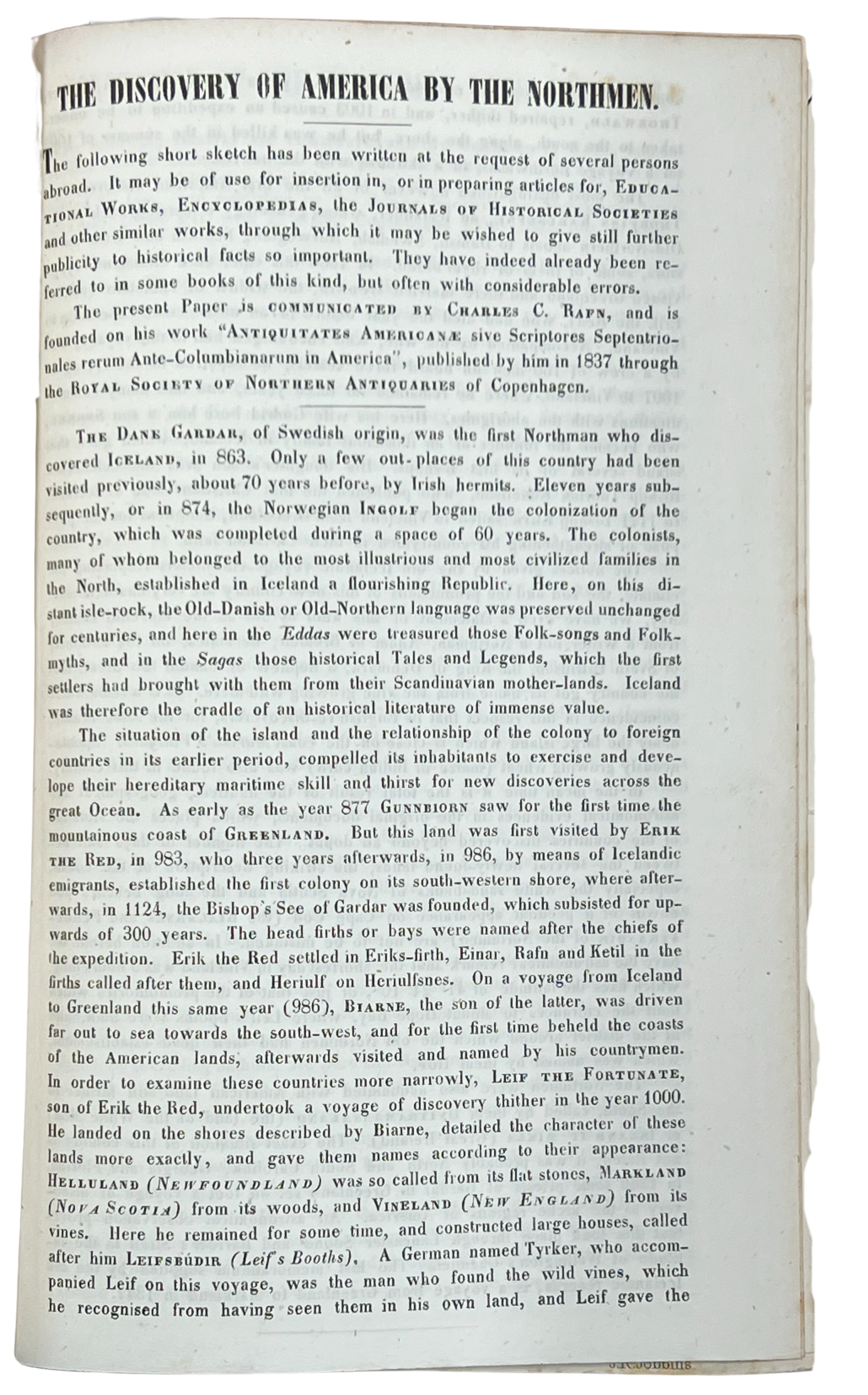
The first Europeans to see continental North America were Icelanders.
Around 985 Bjarni Herjólfsson was blown off course on his journey from Iceland to some settlements in Greenland. He was the first European to see the North American mainland. Encouraged by his reports, Icelanders started exploring the coastal area rom around 1000 onwards.
Archaeological evidence has shown that Icelanders settled at a site in Newfoundland, l’Anse aux Meadows, for at least twenty years.
As written in this article to the right, the Icelanders found land with an abundance of crops and vines which they called Vinland.
4 Exploration of North America
Spain
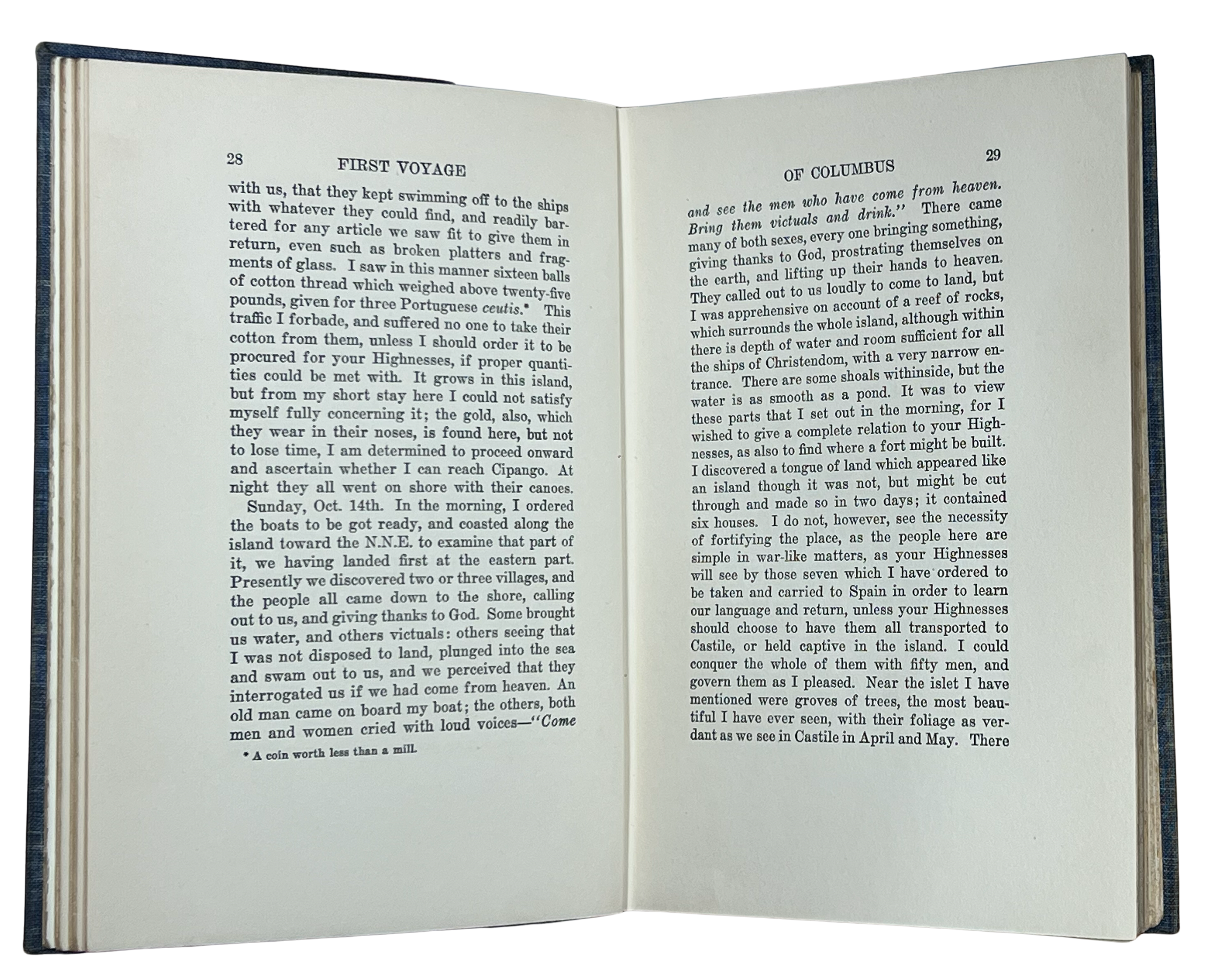
It was not until 1492 that another European, Christopher Columbus, explored the Americas, albeit by accident.
He had landed in the Bahamas, while trying to find a new route to China and India, the Indies. He believed he had found the Indies, and called the inhabitants Indians.
The Spanish continued to colonise large areas of North and South America.
While Columbus was famous for discovering ‘the New World’, he mistreated both slaves and subjects in the regions he ruled over.
Columbus Day has been celebrated since 1792. Many do not celebrate the day because of Columbus’s aforementioned ill-treatment of indigenous people and his long-term influence on European colonisation of the Americas.
In 1977 the same day was declared Indigenous Peoples’ Day in solidarity with America’s indigenous peoples.
This edition of an English translation of Columbus’ journal of his first voyage to America, show a mentions of ‘Indians’ on page 37.
5 Exploration of North America
France
Other European countries also established American colonies in the 16th and 17th centuries.
From 1524 the French colonised an extensive area in central North America, including the Mississippi Valley and Canada.
Netherlands
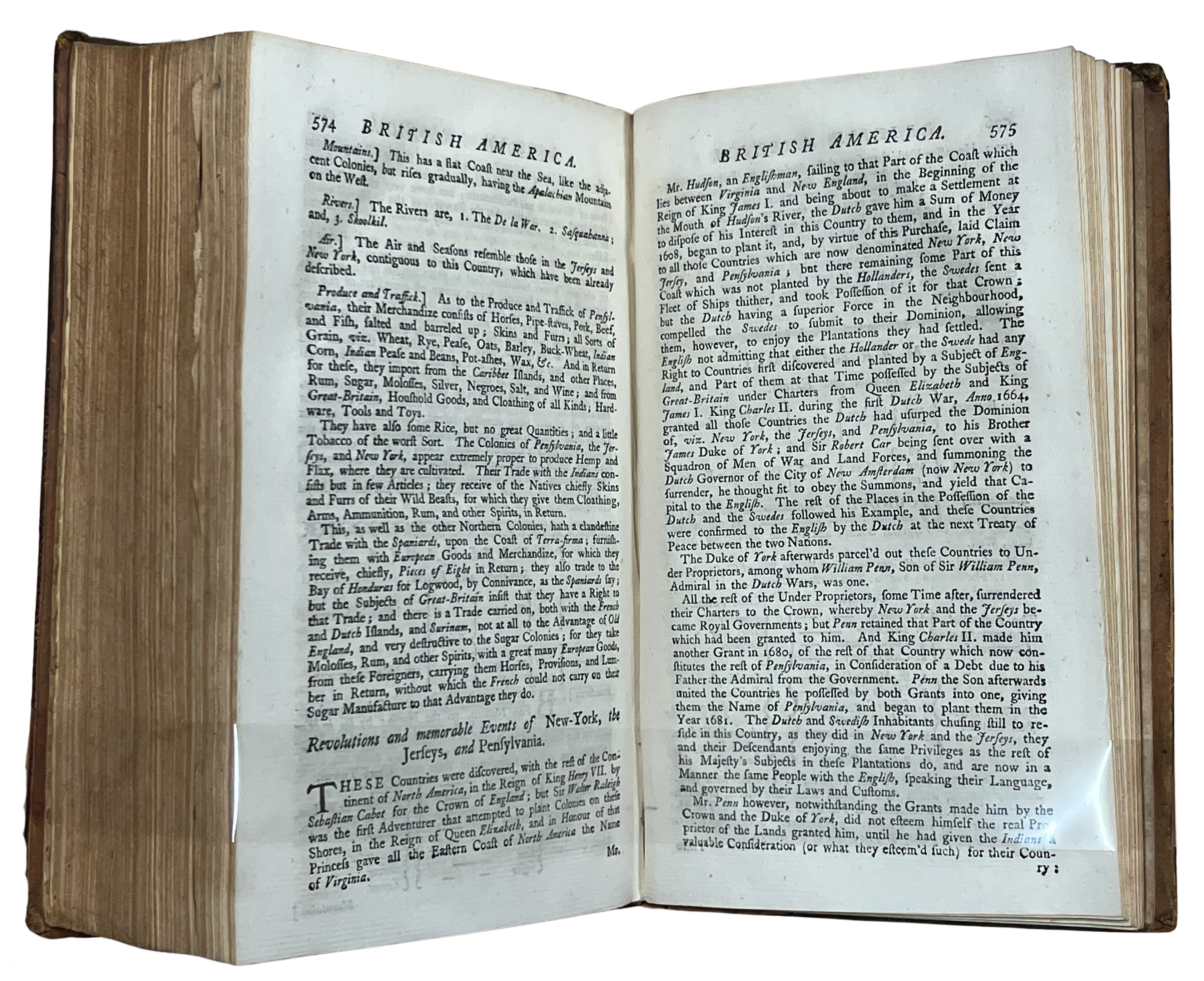
From around 1600 the Dutch colonised the area around what is now New York, and called it New Netherlands. They lost their territory after several wars to the English in the Treaty of Westminster of 1674.
Sweden
The Swedes had settled in the area around the Delaware river in Delaware, Pennsylvania and New Jersey in 1638. The colony was annexed by the Dutch in 1655.
This page gives a summary of the settlement history of the region around present-day New York, via the Swedes, the Dutch and ultimately the English.
6 Exploration of North America
England
England’s earliest claim to land in North America was made in 1496. However, it was not until around 1585 that the English attempted to establish a settlement at Roanoke in North Carolina. They failed.
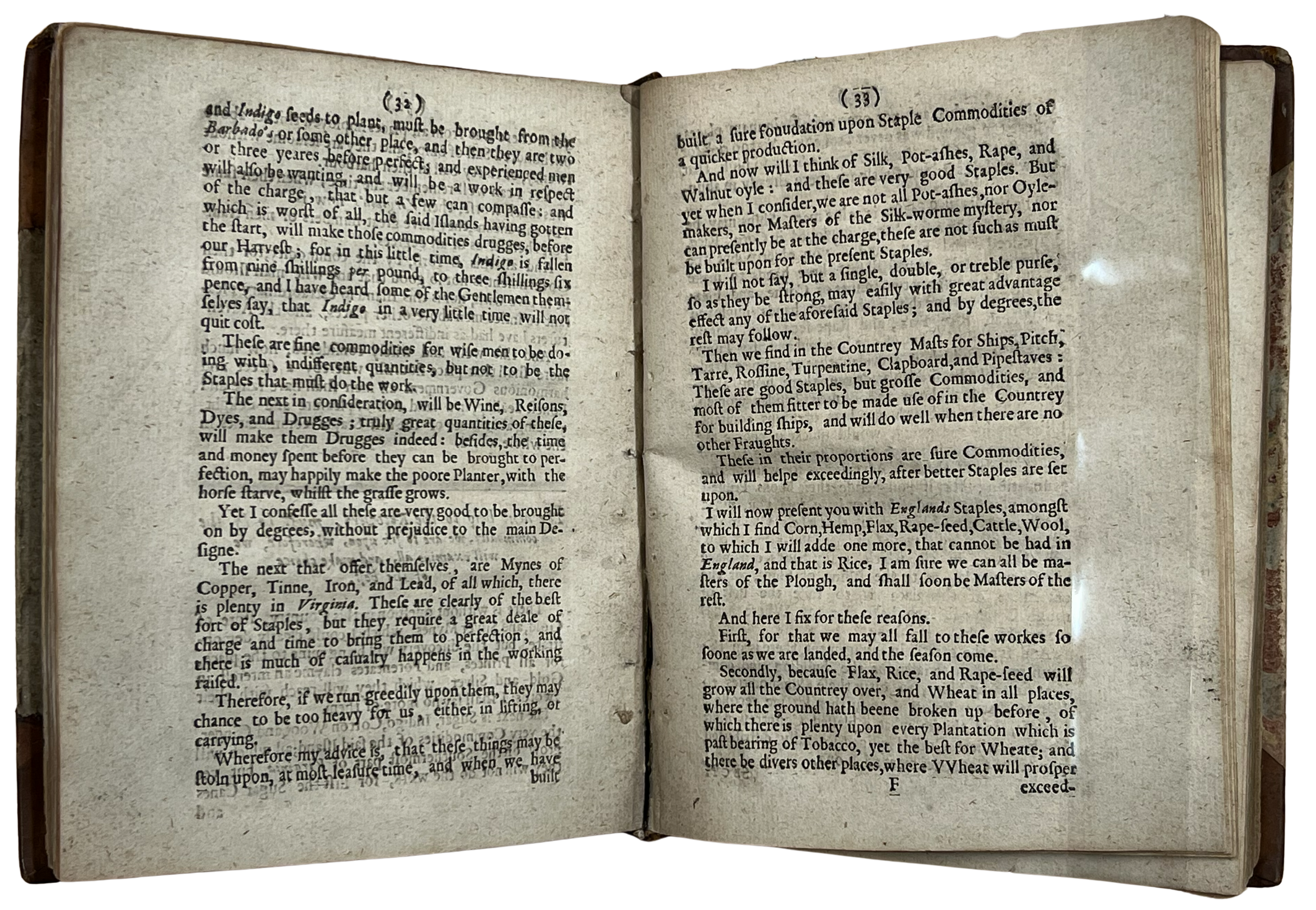
The first permanent English colony in North America, Jamestown (Virginia), was established in 1607. By 1730 the English controlled the Thirteen Colonies, or United Colonies, along the Atlantic Coast.
This book analyses the colony of Virginia in the middle of the 17th Century. William Bullock suggested ways to develop the colony by veering away from growing tobacco as its main crop, and diversifying into other staples, such as arable crops and raw materials.
7 African Slavery in the Colonies
From around 1526 onwards, more than 12.5 million Africans were captured, transported and sold as enslaved servants to the Americas by the Portuguese, Spanish, French and British.
In 1619 a group of Angolans were brought to the new colony of Virginia, and traded for food as enslaved people. This arrival marked the beginning of African slavery in the North American British Colonies.
The Atlantic Slave Trade is the largest forced migration in history. Out of 12.5 million people, 1.8 million died during the voyages from Africa to the Americas.
The Africans who survived were sold into slavery and had to work without pay indefinitely. Enslaved people suffered inhumane travelling, living and working conditions. Consequent illnesses and under-nourishment killed many enslaved children and adults.
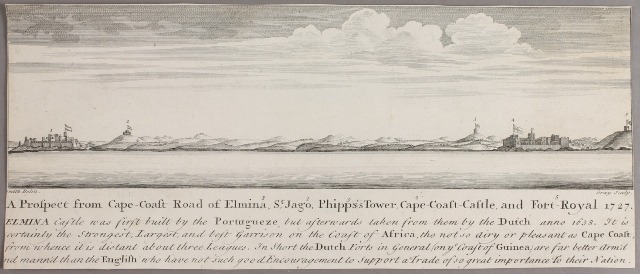
Elmina castle, on the left of the print, located on the coast of present-day Ghana, was a major hub for the Trans-Atlantic Slave Trade.
8 Effects of European Exploration on Native American Population
It is estimated that, during the period of European colonisation, between 80% and 95% of the Native American population died, either as a result of land transactions, forced removal, new diseases or war.
By 1900 only approximately 240,000 Native Americans remained.
Currently between 3.1 and 8.7 million Native Americans are organised into 574 Nations.
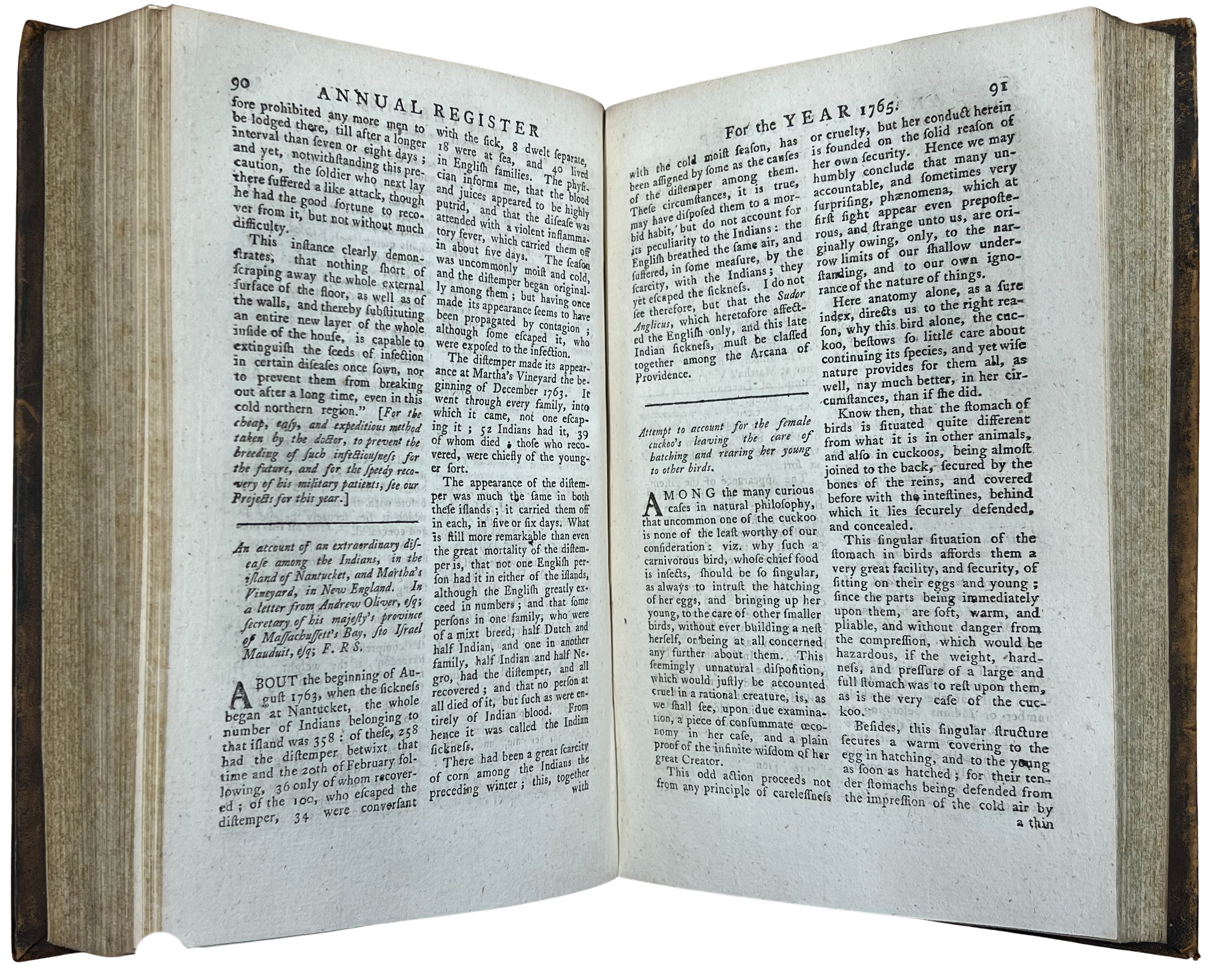
On page 90, it is reported that a disease killed over 85% of the Native American population in Nantucket and Martha’s Vineyard during the winters of 1763-1764. However, the disease did not affect the English population. Later research suggests that it was yellow fever, brought to the area by an Irish ship.
9 Road to Independence
The thirteen colonies and Britain maintained a fragile relationship.
When Great Britain won the Seven Years’ War over France in 1763, a Stamp Act was passed by the British Parliament. This Act imposed a tax on the colonies to help clear the war debt.
The colonies organised boycotts in protest against the Act. This damaged British trade severely, and after much debate in Parliament, the Stamp Act was repealed in March 1766.
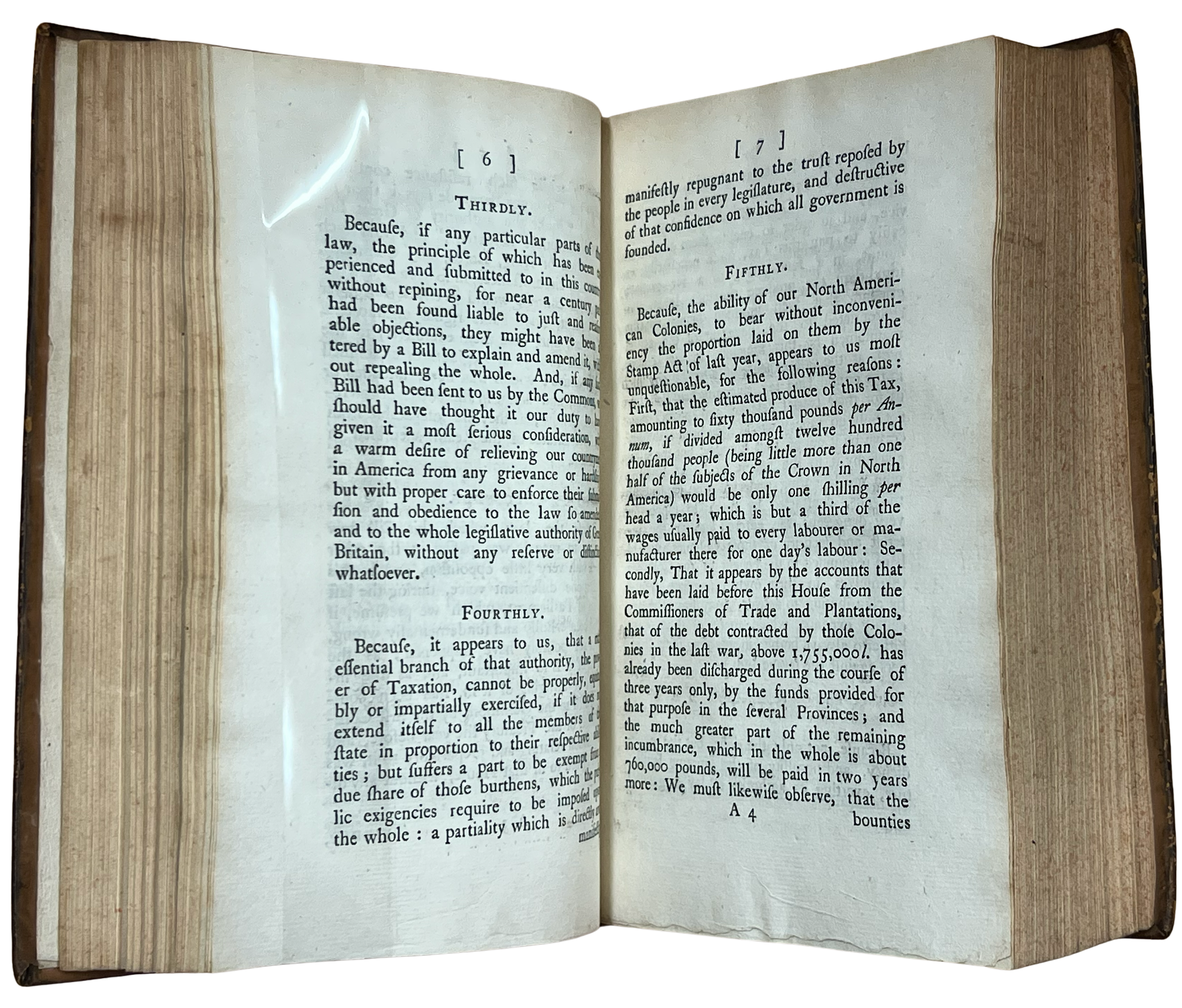
This pamphlet is the first protest against this repeal, drawn up and signed by 33 minority members of the House of Lords.
10 Boston Massacre and Tea Party
Further taxes created more tension and resulted in the Boston Massacre (1770), when five colonists were killed by British soldiers during protests, and the Boston Tea Party (1773).
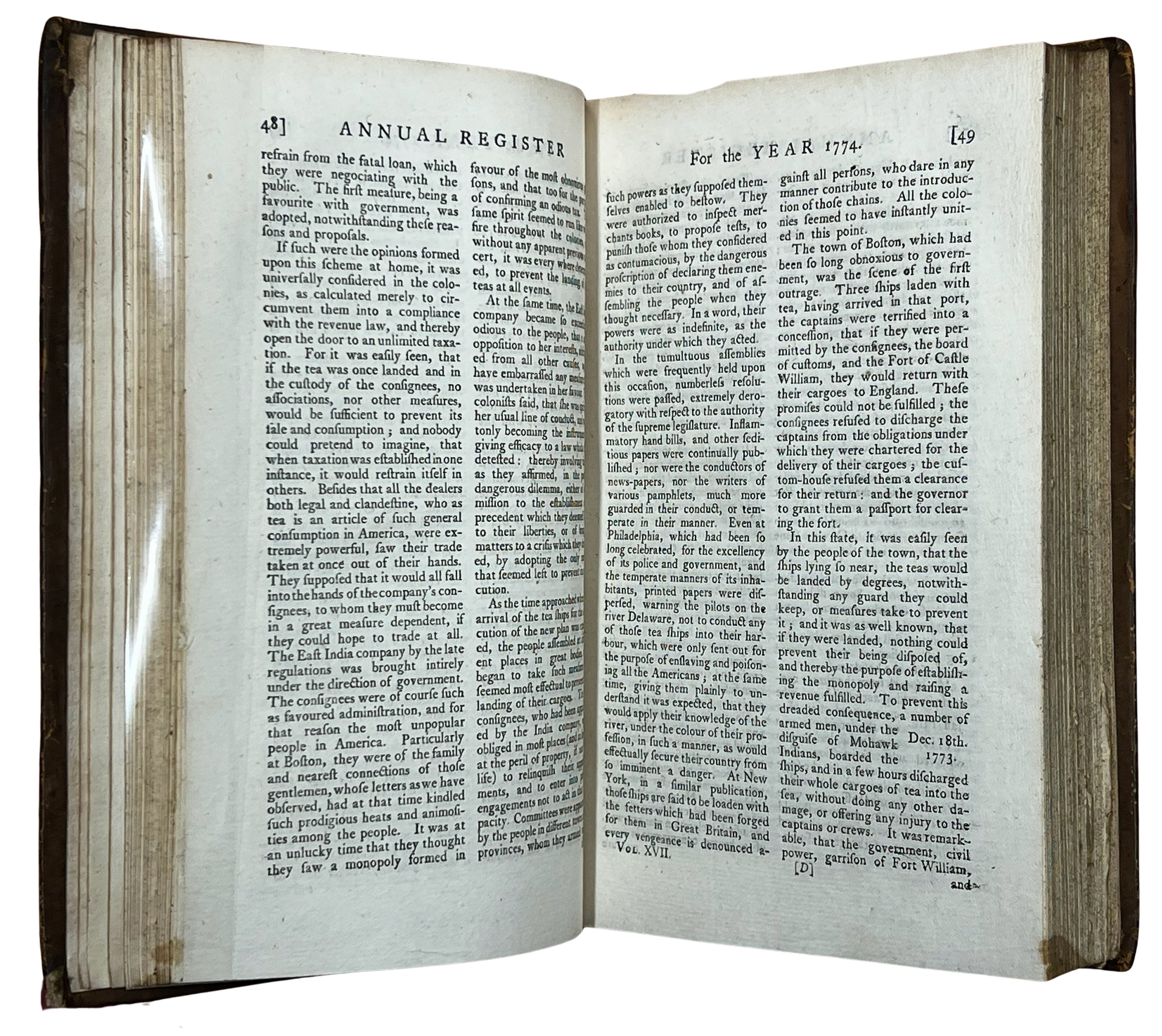
In 1773 colonists protested against the Tea Act, which allowed the East India Company to sell tea in the colonies without paying taxes. However, the colonists still had to pay a tax when they bought the tea. To protest, the colonists threw 340 chests of tea into Boston harbour. This protest became known as the Boston Tea Party.
On display is a contemporary report of the Boston Tea Party (right column on page 49):
…a number of armed men, under the disguise of Mohawk Indians, boarded the ship, and in a few hours discharged their whole cargoes of tea into the sea, without doing any other damage, or offering any injury to the captains or crews.
11 The Coercive Acts of 1774
The British Parliament punished the colonists by passing The Coercive Acts, or The Intolerable Acts, in 1774. The Acts resulted in the shutting down of the Boston Port, deploying troops in and around Boston, and revoking Massachusetts’ Charter, taking away many rights from Massachusetts colonists.
The Acts merely spurred colonists on to further rebellion. They came together in Philadelphia in September 1774 to discuss how the colonies could collectively respond.
They protested the Acts by stockpiling military supplies and boycotting British goods. The Declaration of Rights outlined their rights including life, liberty, property and the right to establish their own taxes within the colonies, as well as the need for rebellion if the Acts were not repealed.
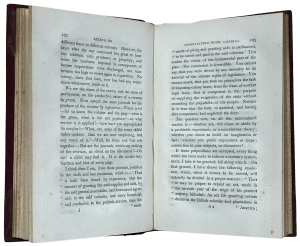
Edmund Burke was one of the British MPs who sympathised with the colonies. On display is part of Edmund Burke’s speech before the House of Commons, stating that he wants to repeal the Boston Port Act.
12 Start of the War of Independence
In April 1775 tensions had grown to such an extent, that revolts in Concorde and Lexington resulted in the outbreak of war between the colonies and Great Britain, – the American War of Independence.
The colonies were supported by France, Spain, the Dutch Republic and the Kingdom of Mysore.
Great Britain was supported by Quebec, American Loyalists, the Kingdom of Hanover and six German states. Native Americans fought for both sides.
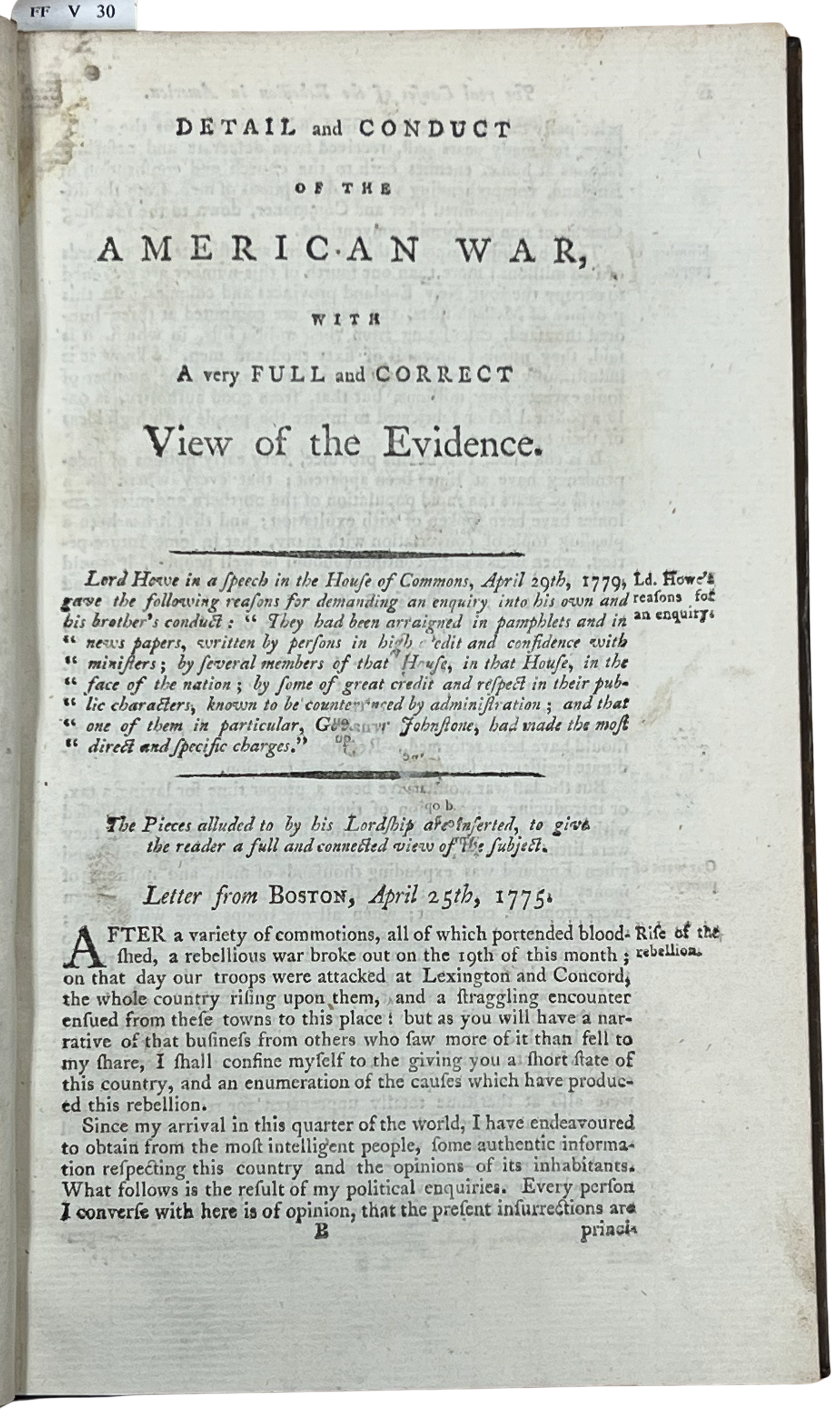
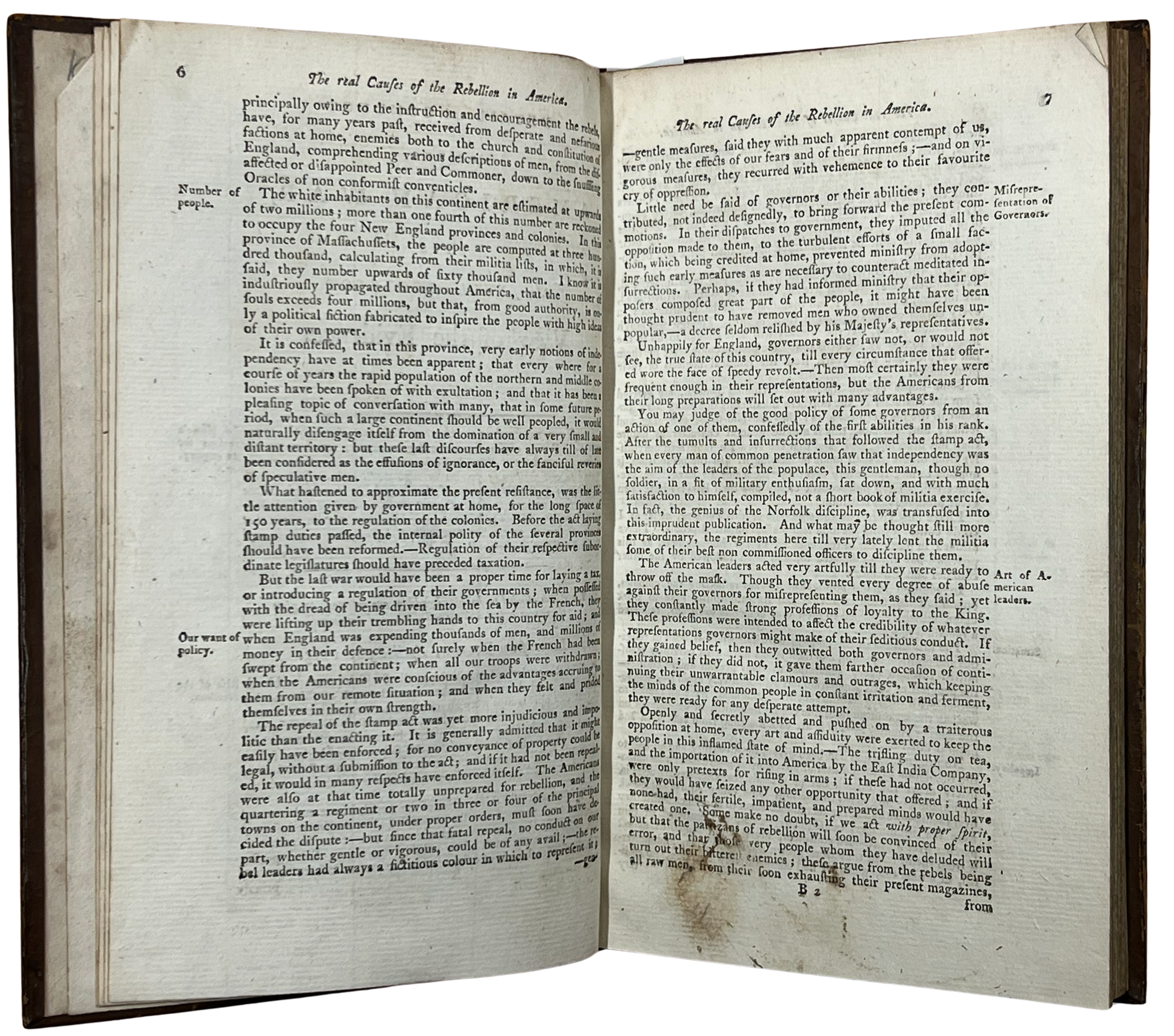
On display is a letter from General William Howe, Commander-in-Chief of the British Army, dated 6 days after the revolts, describing the events.
After a variety of commotions, all of which portended bloodshed, a rebellious war broke out on the nineteenth of this month; on that day our troops were attacked at Lexington and Concord, the whole country rising upon them, and a straggling encounter ensued from these towns to this place…
13 The Second Continental Congress
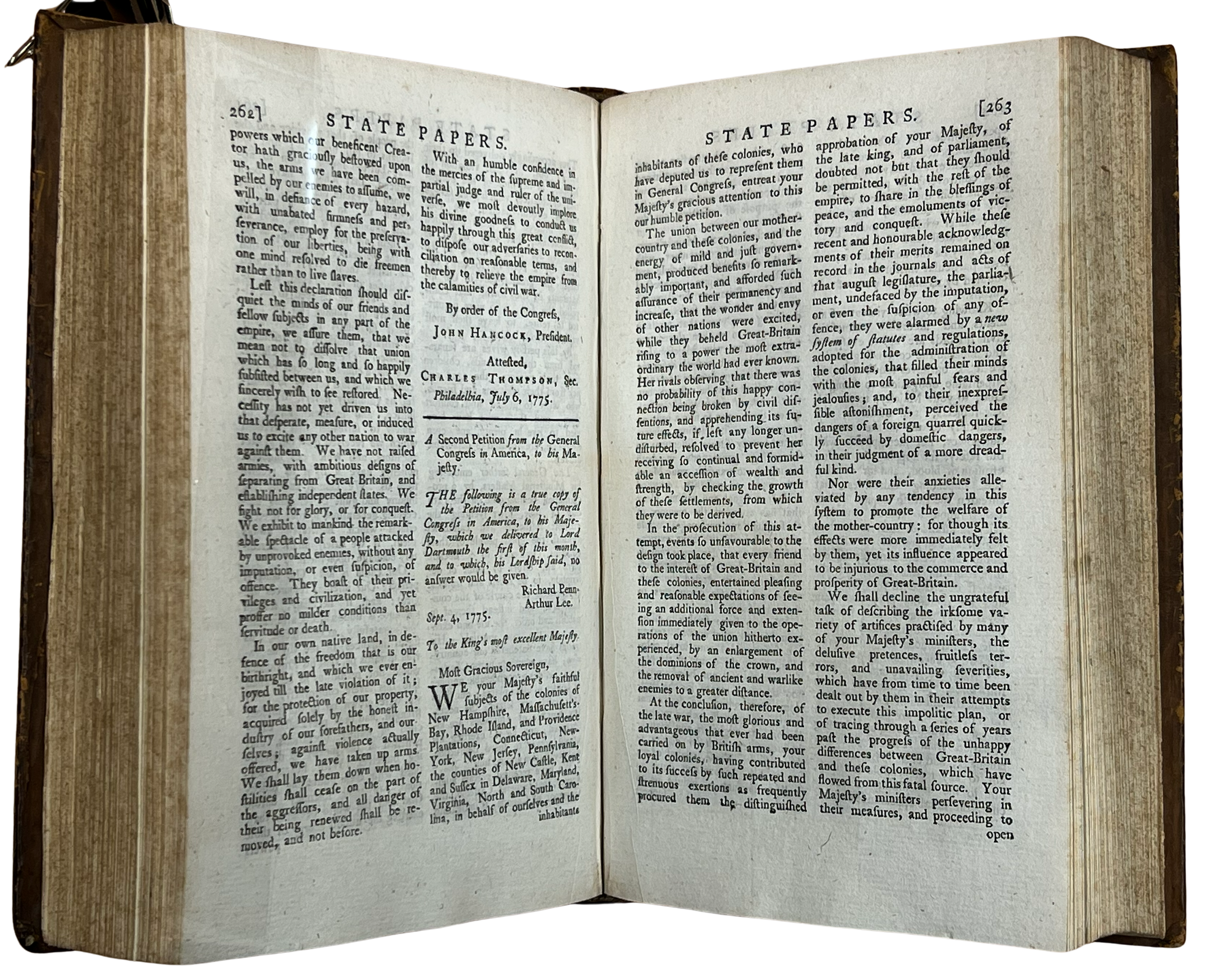
Congress wrote a Declaration of Causes, outlining to Great Britain why the colonies needed an army, and the Olive Branch Petition, a final attempt at clearing any issues. King George III refused to accept both and declared that the colonies were in a state of open rebellion.
After the War of Independence broke out, Congress met again in May 1775. One major task was for Congress to establish an official Continental Army, uniting 20,000 existing colonial militia members.
The colonies realised then that a reconciliation was no longer an option. They needed to declare independence from Britain once and for all.
On display are the conclusion of the Declaration of Causes on the left, followed by the Olive Branch Petition. The two documents show the ambivalence which the colonies felt towards the King and Parliament: loyal subjects, but at the same time willing to offer resistance through armed forces.
14.1 The Declaration of Independence
On 2 July 1776, Congress voted to declare independence.
Congress appointed a Committee of Five to draft and present the Declaration.
On 4 July 1776 Congress ratified the text of the Declaration. That day has become known as Independence Day.
The Declaration of Independence was originally printed as a broadside, a large unfolded sheet of paper, by Congress’s own printer John Dunlap.
After Dunlap’s broadside was distributed through the thirteen colonies, local printers started printing their own versions.
The book Declaring Independence: The Origin and Influence of America’s Founding Document … has, amongst others, reproduced two broadside versions of the Declaration printed in Newport and Salem respectively.
Declaring Independence: The Origin and Influence of America’s Founding Document …
Christian Y. Dupont, Peter S. Onuf, 2008
P002475765
14.2 Native Americans and the Declaration of Independence
Although being the original inhabitants of the land, Native Americans were not granted basic human rights until 1924.
In that year they were granted the right to citizenship in the United States. However, they were not granted the right to vote in all 50 states until 1948.
Native Americans have since used the 1776 Declaration of Independence as inspiration for their own declarations of rights and independence in America.
The 1961 ‘Declaration of Indian Purpose’ held the United States to the ideals from the Declaration of Independence, applying them to all people, including the Native Americans.
The Declaration of Independence refers to the Native American Nations as
the inhabitants of our frontiers, the merciless Indian Savages, whose known rule of warfare, is an undistinguished destruction of all ages, sexes and condition…
leaving no doubt about the status of the Native Americans within the newly established United States of America.
15 Influences on the Declaration of Independence : Thomas Paine
Many ideas from existing documents, and from the Enlightenment influenced the text of the Declaration of Independence.
Thomas Paine’s pamphlet Common sense; addressed to the inhabitants of America, published in January 1776, urged the people in the Thirteen Colonies to declare independence.
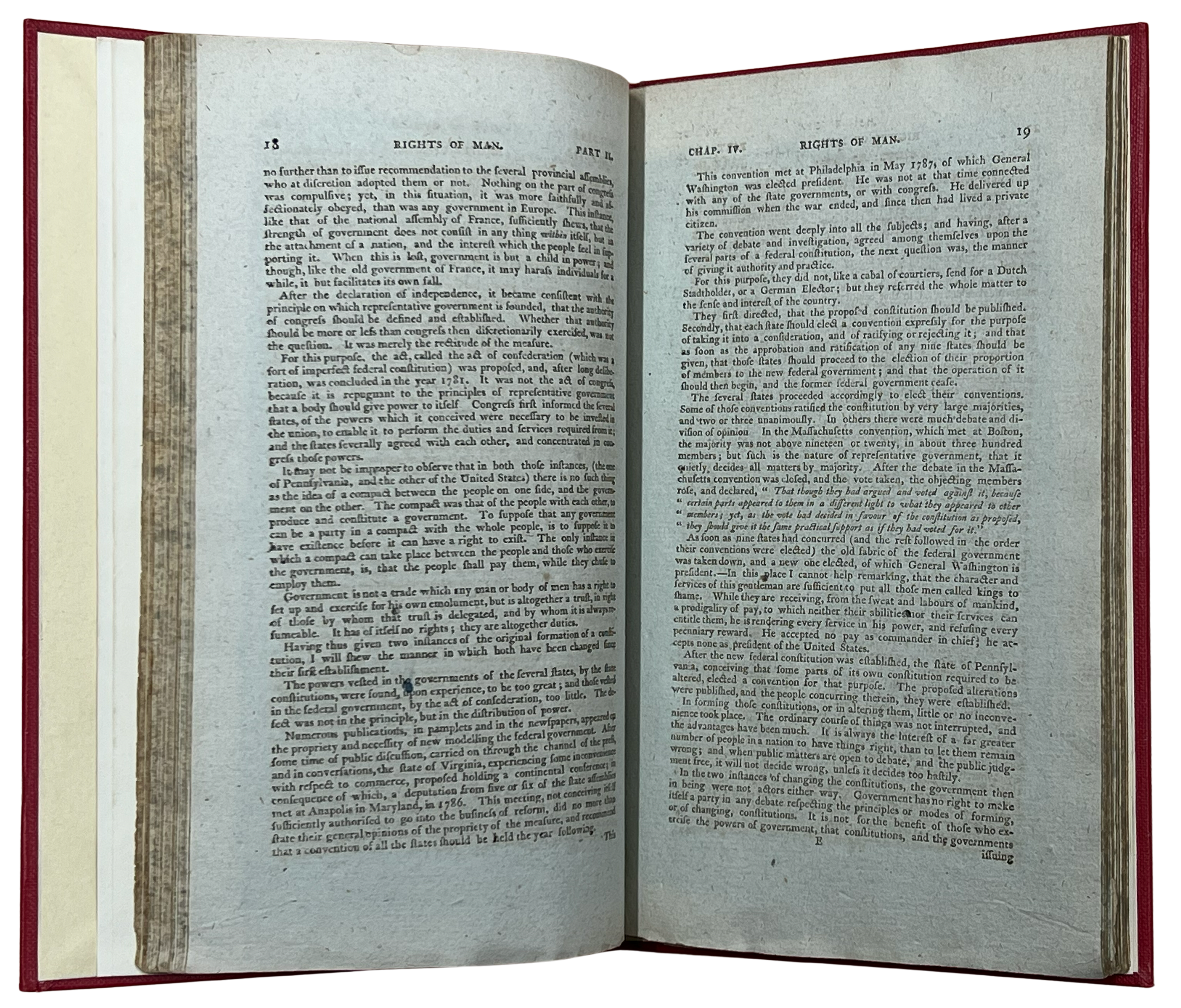
On display is a later work by Paine in which he offers support to the French Revolution. He refers repeatedly to examples from the America, such as the chapter on Constitutions on page 201.
16 Influences on the Declaration of Independence : David Hume
One of the Committee of Five, Benjamin Franklin, was influenced by David Hume, a philosopher, historian and economist.
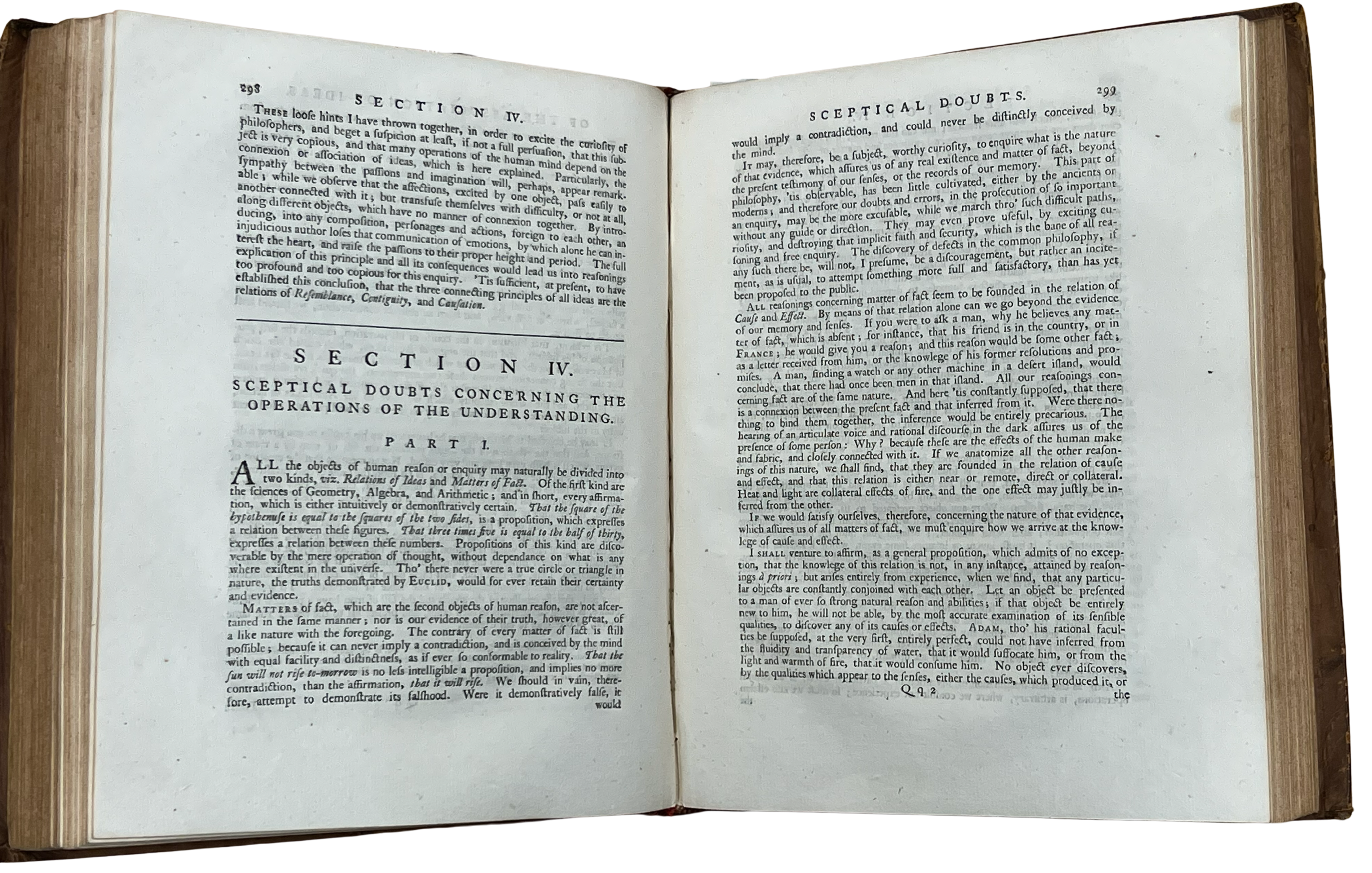
Hume introduced the idea that true knowledge can only come from the senses, ‘relations of ideas’ and experimental evidence, ‘matters of fact’.
This idea made Franklin make one of the most important changes in the Declaration:
We hold these truths to be sacred and undeniable.
was changed to
We hold these truths to be self-evident.
This alteration changed the tone of the declaration from a religious declaration to a more rational one.
The start of Section IV ‘Sceptical Doubts concerning the operations of the understanding’ shows Hume’s explanation of ‘Relations of Ideas’ and ‘Matters of fact’.
17 Influences on the Declaration of Independence : John Locke
Political philosopher John Locke talks about the people’s right of rebellion. This right received a prominent place in the Declaration of Independence.
Locke argued for absolute natural rights possessed by all individuals, including ‘Life, Liberty, and Property’. He subsequently argued for the people’s right of rebellion against abusive governments.
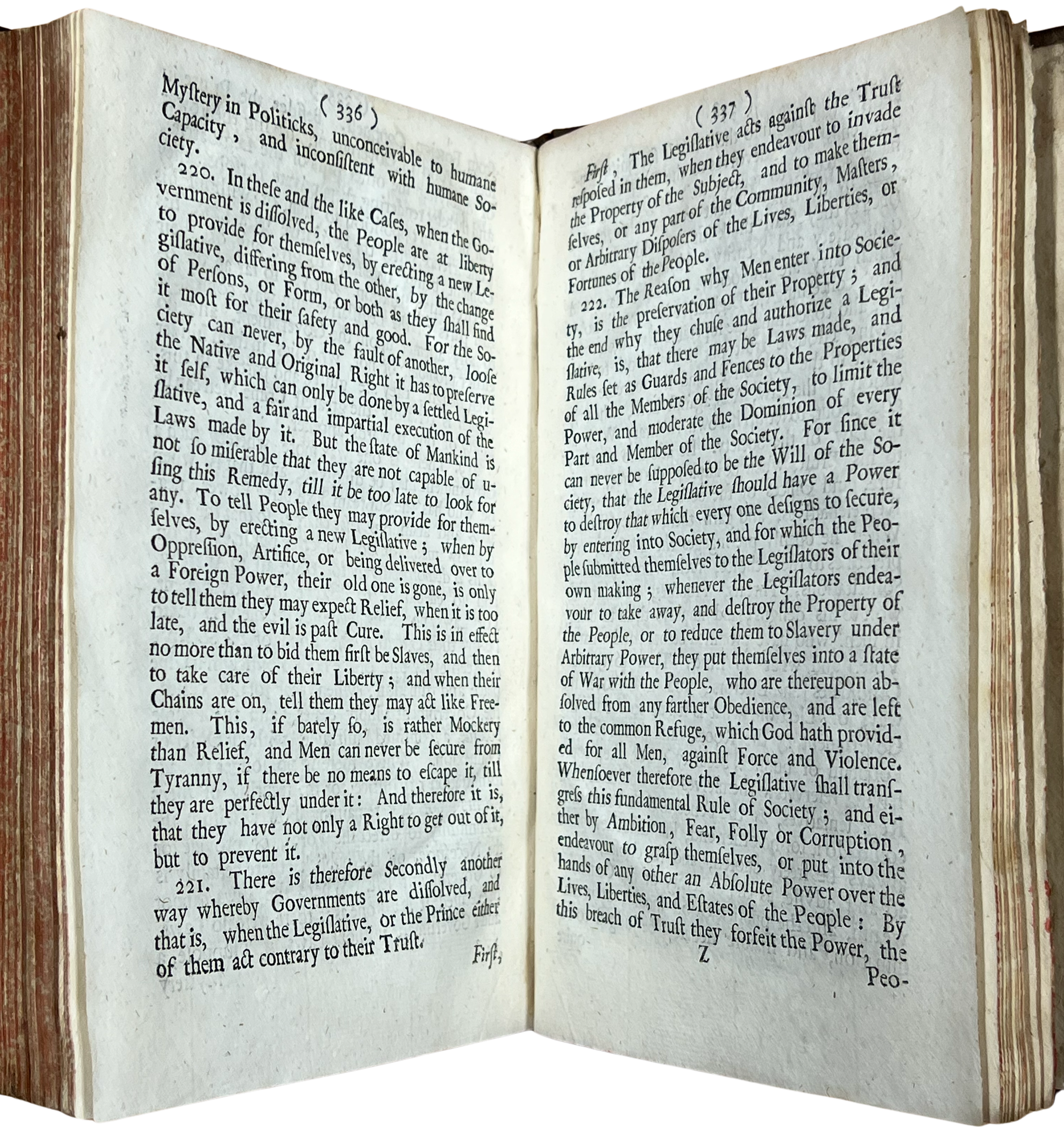
This right of rebellion is referred to in point 222 on page 337:
Whenever the Legislators endeavor to take away, and destroy the Property of the People, or to reduce them to Slavery under Arbitrary Power, they put them-selves into a state of War with the People, who are thereupon absolved from any farther Obedience, and are left to the common Refuge, …, against Force and Violence. … By this breach of Trust they forfeit the Power, the People had put into their hands, for quite contrary ends, and it devolves to the People, who have a Right to resume their Original Liberty.
18 Influences on the Declaration of Independence : Francis Hutcheson
The first paragraph of the Declaration of Independence reads:
We hold these truths to be self-evident, that all men are created equal, that they are endowed by their Creator with certain unalienable Rights, that among these are Life, Liberty and the pursuit of Happiness.
The rights mentioned in the Declaration are more in line with the ideas of philosopher Francis Hutcheson than with John Locke’s idea of natural rights, ‘Life, Liberty and Property’.
Hutcheson introduced the difference between alienable and unalienable rights in his ‘A System of Moral Philosophy’ on page 261, point IV:
Our rights are either alienable or unalienable. … Thus our right to our goods and labours is naturally alienable. But where either the translation cannot be made with any effect or where no good in human life requires it, the right is unalienable and cannot be justly claimed by any other but the person originally possessing it. … The right of private judgment is therefore unalienable.
19 King George III’s Reaction
The Declaration was printed on a large sheet of unfolded paper, a so-called broadside, and distributed.
It is thought that King George III saw the Declaration for the first time through one of the broadsides, rather than through an official copy sent to him directly.
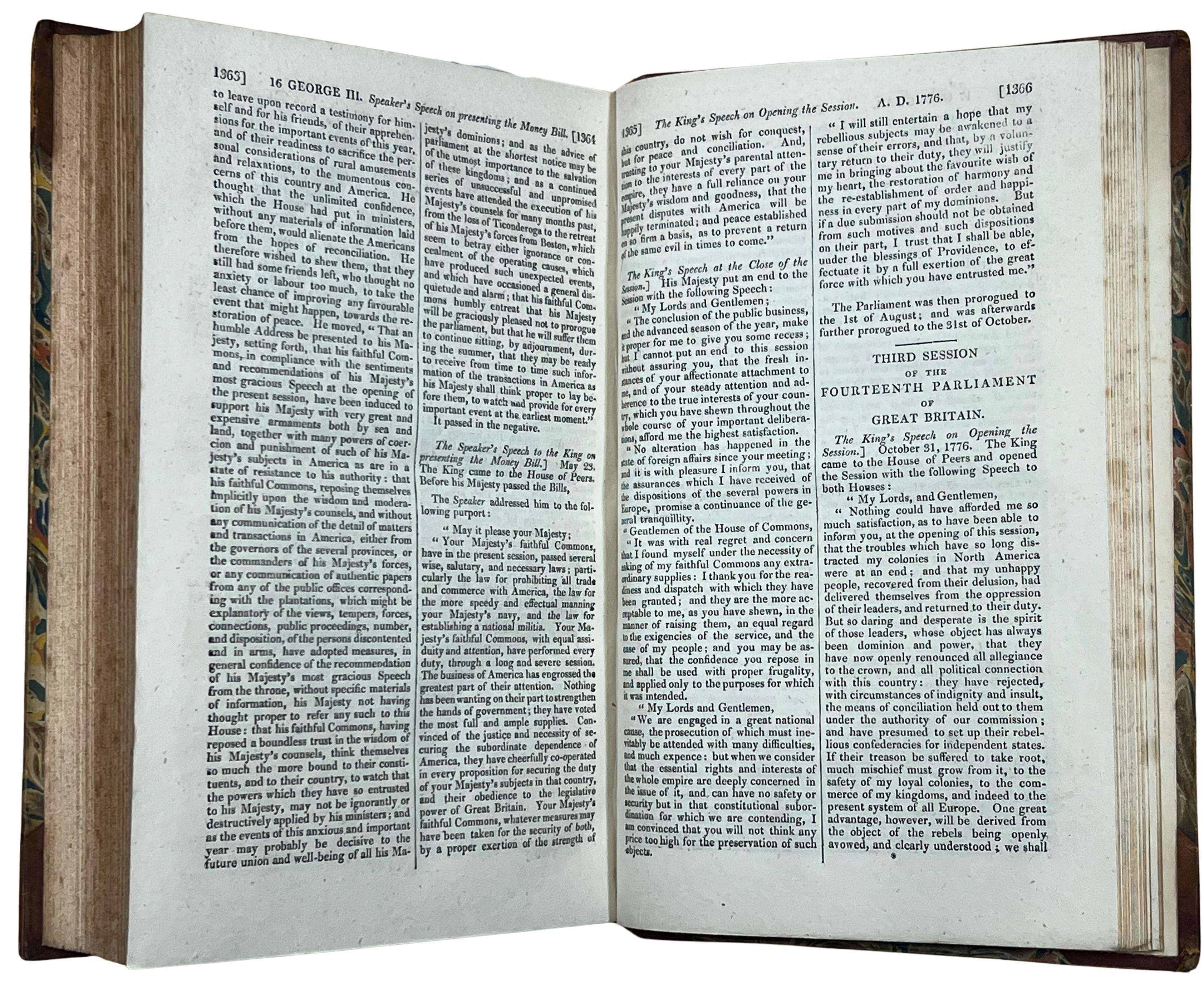
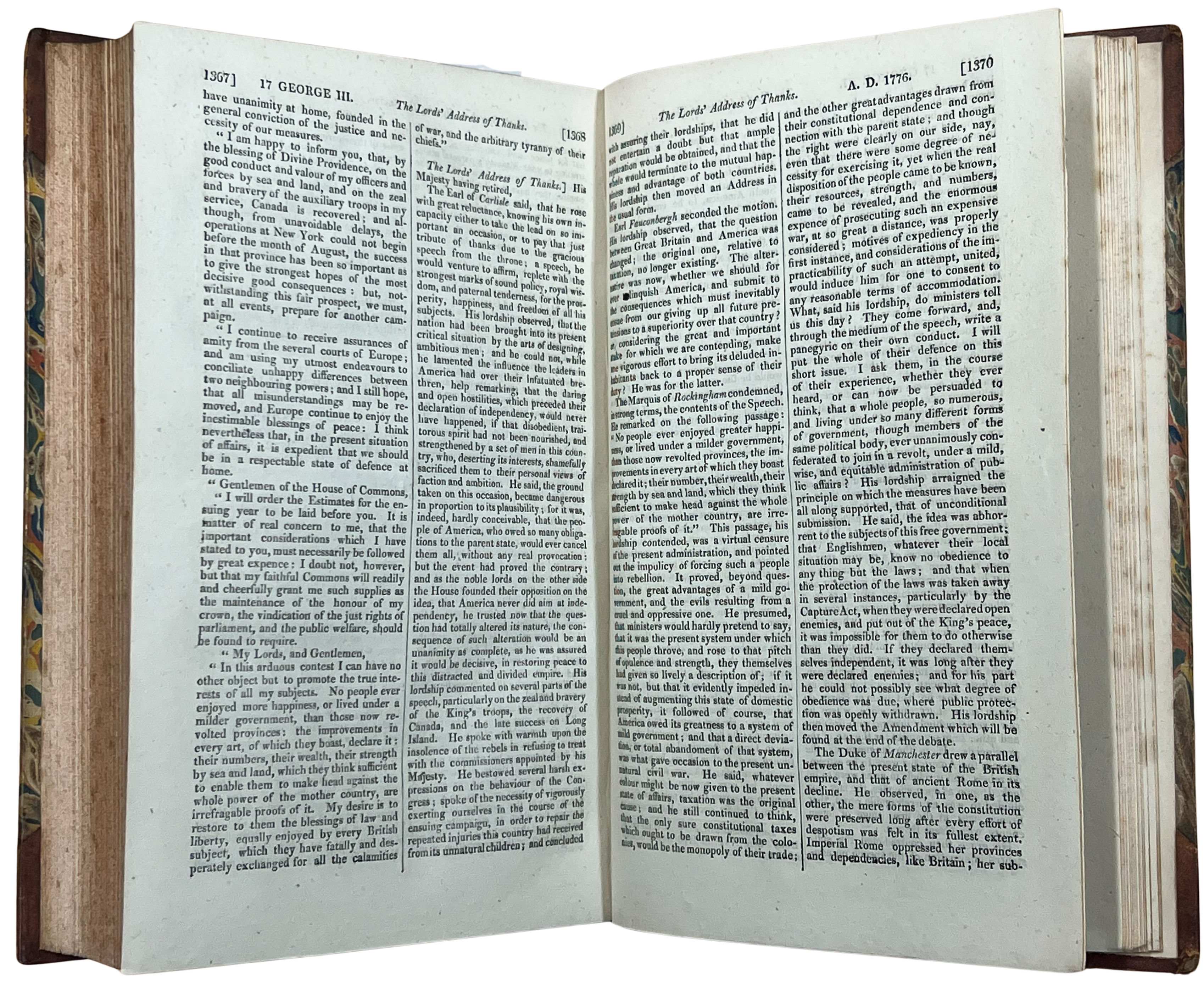
On display is the King’s first official, scathing reaction to the Declaration from a speech before Parliament on 31 October 1776 (column 1366):
Nothing could have afforded me so much satisfaction as to have been able to inform you […] that my unhappy people, recovered from their delusion, had delivered themselves from the oppression of their leaders, and returned to their duty: but so daring and desperate is the spirit of those leaders, whose object has always been dominion and power, that they have now openly renounced all allegiance to the crown, and all political connection with this country; they have rejected, with circumstances of indignity and insult, the means of conciliation held out to them under the authority of our commission; and have presumed to set up their rebellious confederacies for independent states.
20 American War of Independence
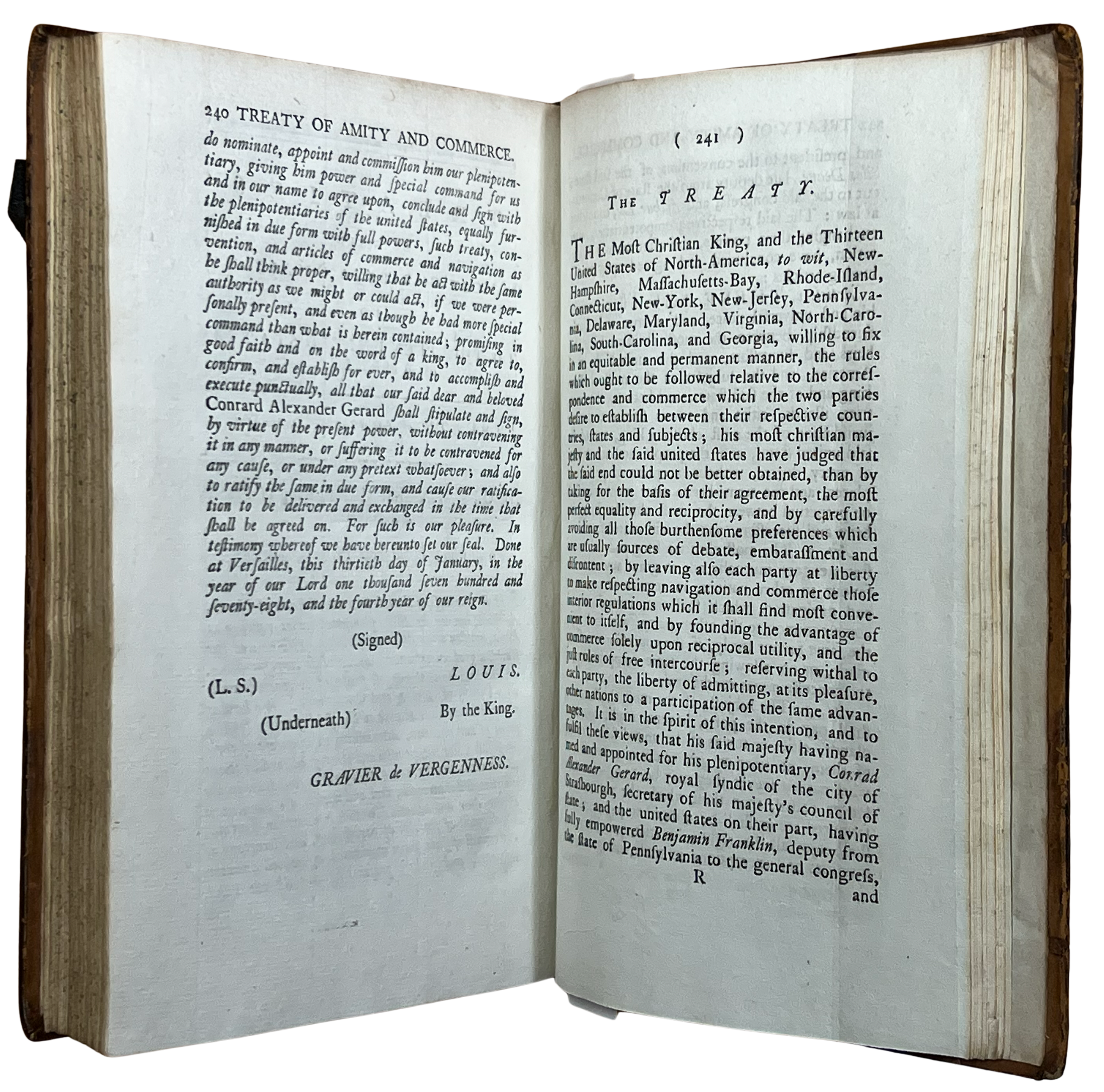
The Treaty recognised the independence of the United States of America.
The American War of Independence ended when the Treaty of Paris was signed in 1783.
The start of the Treaty text is on display. It acknowledges the previous issues, struggles and disagreements.
21 Abolition of the Slave Trade
Foreign slave trade was abolished in Britain in 1806, and in the United States in 1808.
Domestic slave trade in the United States continued well into the 1860s. Around 1.2 million people, including children, were sold and forcefully moved elsewhere. It was eventually abolished in 1865.
Currently nearly 43 million African Americans, descendants from Africans who were enslaved, live in the US.
The debate on display on the lower right shows Lord Grenville’s impassionate speech for the abolition of foreign slavery,
The Resolution imported that the African Slave trade was contrary to the principles of humanity, of justice, and of sound policy. As to the first point, could any man in that house, or in the country, he would ask, raise his voice, and, in his mind and conscience, say, that the slave trade was not contrary to humanity? What was the object of the slave trade? To tear men from the bosom of their families their country, their friends, wives, brothers, children, from all that was dear to them in society, and in their country?
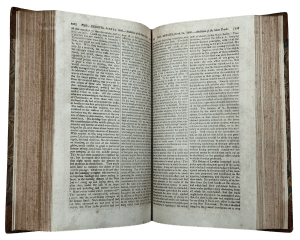
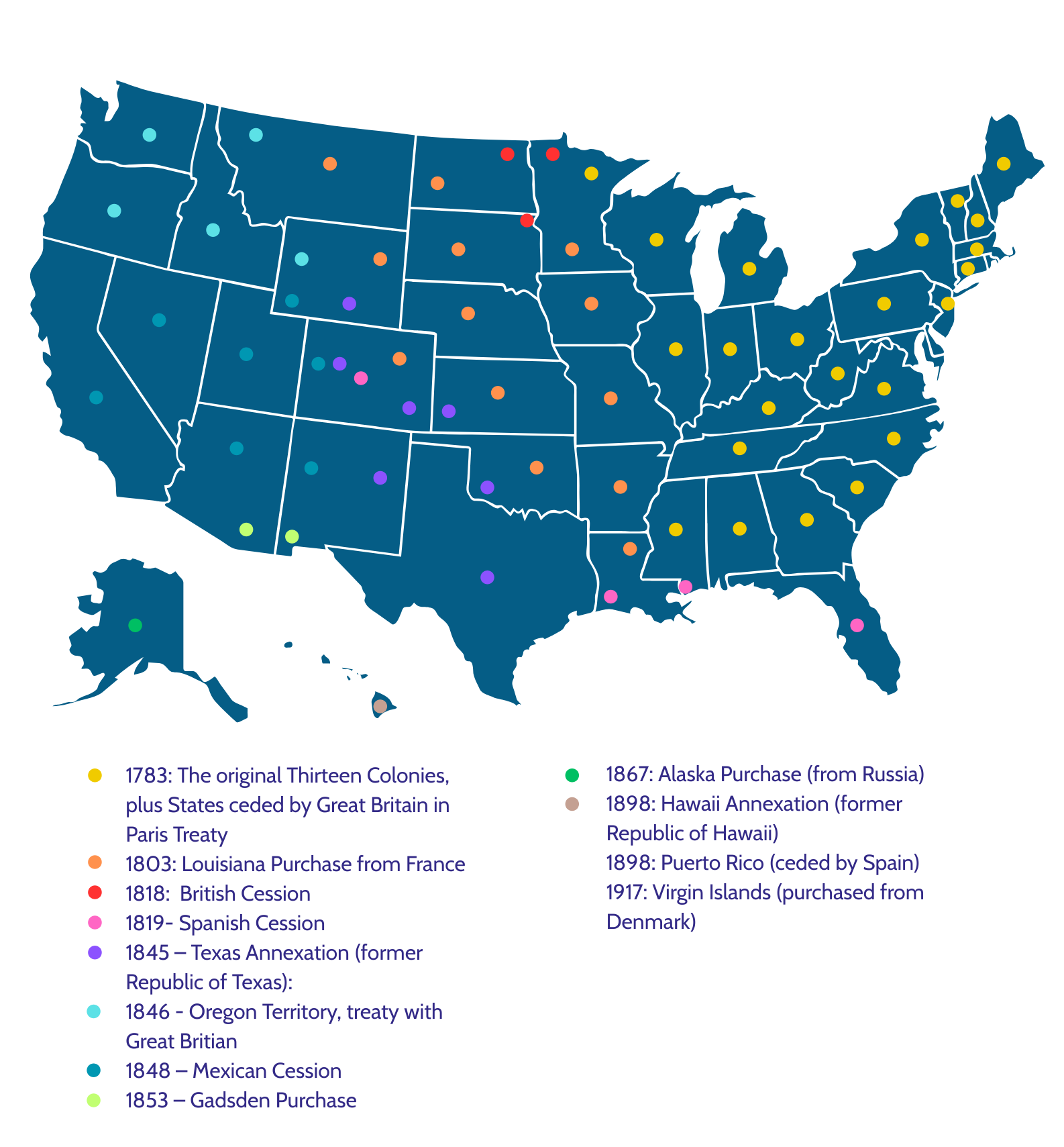
22 Geographical Growth of the United States of America
The United States of America in its current geographical form has only been in existence since 1917.
From the Declaration of Independence in 1776 onwards, gradually parts of the continent were transferred to the United States of America.
Map of the formation of the current United States of America